7 Tips for Daily Fitness Routine at Home 2026
Are you tired of crowded gyms, expensive memberships, and the hassle of commuting just to get a workout in? In 2026, transforming your body…

Are you tired of crowded gyms, expensive memberships, and the hassle of commuting just to get a workout in? In 2026, transforming your body and boosting your well-being from the comfort of your own home has never been more accessible or effective. Imagine waking up feeling energized, stronger, and more confident, all thanks to a consistent, personalized daily fitness routine at home. This comprehensive guide will equip you with everything you need to create a sustainable and exhilarating fitness regimen that fits your life, your goals, and your space. We’ll delve into the science behind building habits, explore a vast array of exercises, offer practical tips for staying motivated, and even provide a sample routine to get you started. Get ready to unleash your potential and discover the incredible power of a daily fitness routine at home.
Why a Daily Fitness Routine at Home is a Game-Changer in 2026
The landscape of fitness has dramatically shifted, and for good reason. The convenience, cost-effectiveness, and sheer flexibility offered by home-based workouts are undeniable. In 2026, with advancements in virtual training and accessible equipment, there’s no excuse not to prioritize your health. Engaging in a daily fitness routine at home isn’t just about shedding pounds or building muscle; it’s a holistic approach to improving mental clarity, reducing stress, enhancing sleep quality, and significantly boosting your overall quality of life. The commitment to a daily practice, even for short durations, yields cumulative benefits that far outweigh sporadic, intense gym sessions. Think of it as an investment in your future self, with daily dividends of improved health and happiness.
The Science of Habit Formation: Making Your Daily Fitness Stick
The key to a successful daily fitness routine at home lies in habit formation. Our brains are wired to seek efficiency, and once an activity becomes a habit, it requires significantly less willpower. Understanding the habit loop – cue, routine, reward – is crucial.
- Cue: This is the trigger that initiates the behavior. For a daily fitness routine, your cue could be waking up, finishing your morning coffee, or a specific time of day.
- Routine: This is the actual fitness activity itself. It could be a 30-minute yoga session, a 15-minute HIIT workout, or a brisk walk around your neighborhood.
- Reward: This is the positive reinforcement that makes the habit stick. It could be the feeling of accomplishment, a sense of calm, improved energy levels, or even a small treat (like a healthy smoothie).
To establish your daily fitness routine at home, start small. Aim for just 10-15 minutes initially. Consistency is far more important than intensity when building a habit. Over time, as the routine becomes ingrained, you can gradually increase the duration and intensity. Environment design also plays a role. Lay out your workout clothes the night before, set up your designated workout space, and minimize distractions.
Overcoming Common Obstacles to Home Workouts
Despite the allure of home workouts, many people struggle with consistency. Let’s address some common hurdles and how to overcome them:
- Lack of Motivation: This is perhaps the biggest challenge. Combat it by finding activities you genuinely enjoy, tracking your progress, setting realistic goals, and finding an accountability partner (even a virtual one!).
- Distractions: Kids, pets, household chores, the ever-tempting internet – distractions abound at home. Designate a specific workout time and space, communicate your needs to family members, and consider using noise-canceling headphones.
- Limited Space: You don’t need a sprawling home gym to get a great workout. Many effective exercises require minimal space. Focus on bodyweight movements, resistance bands, or compact equipment like dumbbells.
- Boredom: Doing the same routine every day can lead to monotony. Keep your daily fitness routine at home fresh by varying your exercises, trying new workout styles, and incorporating music or podcasts.
- Feeling Unsure Where to Start: This is where this guide comes in! We’ll provide a wealth of options and a structured approach.
Crafting Your Personalized Daily Fitness Routine at Home
The beauty of a home fitness routine is its adaptability. It should be tailored to your individual needs, preferences, and goals. Here’s a step-by-step approach to building yours:
Step 1: Define Your Goals
What do you want to achieve with your daily fitness routine at home? Be specific and realistic.
- Weight Loss: Focus on calorie-burning activities like cardio and strength training.
- Muscle Gain: Prioritize resistance training and progressive overload.
- Improved Cardiovascular Health: Incorporate aerobic exercises like running, cycling, or dancing.
- Increased Flexibility and Mobility: Dedicate time to stretching, yoga, or Pilates.
- Stress Reduction: Mind-body practices like yoga, tai chi, or mindful movement can be highly effective.
- Overall Well-being: A balanced routine incorporating elements of cardio, strength, and flexibility is ideal.
Step 2: Assess Your Current Fitness Level
Be honest about where you are right now. This will help you choose appropriate exercises and avoid injury.
- Beginner: Focus on mastering basic movements with good form. Start with lower intensity and shorter durations.
- Intermediate: You can handle more complex exercises and longer workouts. Consider increasing intensity and adding more challenging variations.
- Advanced: You likely have a solid foundation. Focus on progressive overload, periodization, and advanced training techniques.
Step 3: Choose Your Activities
The options for a daily fitness routine at home are virtually endless. Mix and match to create a well-rounded program.
Cardiovascular Exercises (Cardio)
Cardio is essential for heart health, calorie burning, and endurance.
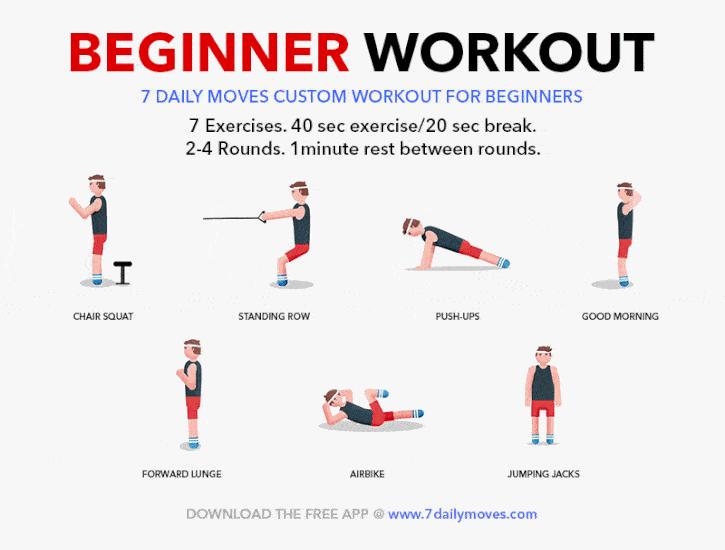
- Jumping Jacks: A classic full-body cardio move.
- High Knees: Great for raising your heart rate quickly.
- Butt Kicks: Engages hamstrings and glutes while providing a cardio burst.
- Burpees: A highly effective, compound exercise that works multiple muscle groups.
- Mountain Climbers: Excellent for core strength and cardiovascular conditioning.
- Shadow Boxing: A fun way to get your heart rate up and improve coordination.
- Dancing: Put on your favorite music and move!
- Jumping Rope: Requires minimal space and is a fantastic calorie burner.
- Stair Climbing: If you have stairs at home, use them!
- Indoor Cycling: Stationary bikes are a great investment for dedicated cardio.
- Running in Place: Simple and effective.
- Brisk Walking (around your home or a treadmill): Accessible for most fitness levels.
Strength Training Exercises
Building muscle boosts metabolism, improves body composition, and strengthens bones.
- Bodyweight Exercises:
- Squats: Works quads, hamstrings, glutes, and core.
- Lunges: Targets quads, hamstrings, and glutes, also improves balance.
- Push-ups: Excellent for chest, shoulders, triceps, and core. (Modify on knees if needed).
- Plank: A foundational core exercise.
- Glute Bridges: Activates glutes and hamstrings.
- Crunches/Sit-ups: Targets abdominal muscles.
- Leg Raises: Focuses on lower abdominal muscles.
- Triceps Dips (using a chair): Works the triceps.
- Calf Raises: Strengthens calf muscles.
- Resistance Band Exercises:
- Band Pull-Aparts: Great for upper back and shoulder health.
- Bicep Curls: Works biceps.
- Triceps Extensions: Works triceps.
- Squats with Band Resistance: Adds challenge to lower body squats.
- Rows with Band Resistance: Targets back muscles.
- Dumbbell/Kettlebell Exercises (if available):
- Dumbbell Squats/Goblet Squats: Adds external weight to squats.
- Dumbbell Rows: Works back muscles.
- Overhead Press: Strengthens shoulders.
- Bicep Curls: Classic arm exercise.
- Triceps Extensions: Targets triceps.
- Deadlifts (with proper form): A powerful full-body exercise.
- Kettlebell Swings: Excellent for posterior chain development and cardio.
Flexibility and Mobility Exercises
Crucial for injury prevention, range of motion, and recovery.
- Stretching:
- Hamstring Stretch: Improves flexibility in the back of the thighs.
- Quad Stretch: Targets the front of the thighs.
- Triceps Stretch: Stretches the back of the upper arms.
- Shoulder Stretch: Improves shoulder mobility.
- Chest Stretch: Opens up the chest, especially important for desk workers.
- Spinal Twist: Promotes spinal mobility and can relieve back tension.
- Yoga: Numerous styles like Hatha, Vinyasa, or Yin Yoga offer a holistic approach to flexibility, strength, and mindfulness.
- Pilates: Focuses on core strength, control, and precise movements.
- Dynamic Warm-ups: Arm circles, leg swings, torso twists prepare your body for exercise.
- Foam Rolling: Aids in muscle recovery and releases tension.
Step 4: Determine Frequency and Duration
- Frequency: Aim for at least 30 minutes of moderate-intensity exercise most days of the week, as recommended by health organizations. For a daily routine, this might mean shorter, more frequent sessions.
- Duration: Even 15-20 minutes of focused exercise can be highly beneficial. Listen to your body and start with what feels manageable.
Step 5: Structure Your Week
A balanced weekly schedule prevents overtraining and ensures you work different muscle groups. Consider a split routine or a full-body approach.
- Full Body: Work all major muscle groups in each session. Great for beginners and those with limited time.
- Split Routine:
- Upper/Lower Body Split: Dedicate days to upper body exercises and other days to lower body.
- Push/Pull/Legs Split: Push days focus on chest, shoulders, triceps. Pull days focus on back, biceps. Leg days focus on quads, hamstrings, glutes, calves.
Step 6: Plan Your Warm-up and Cool-down
Never skip these crucial components!
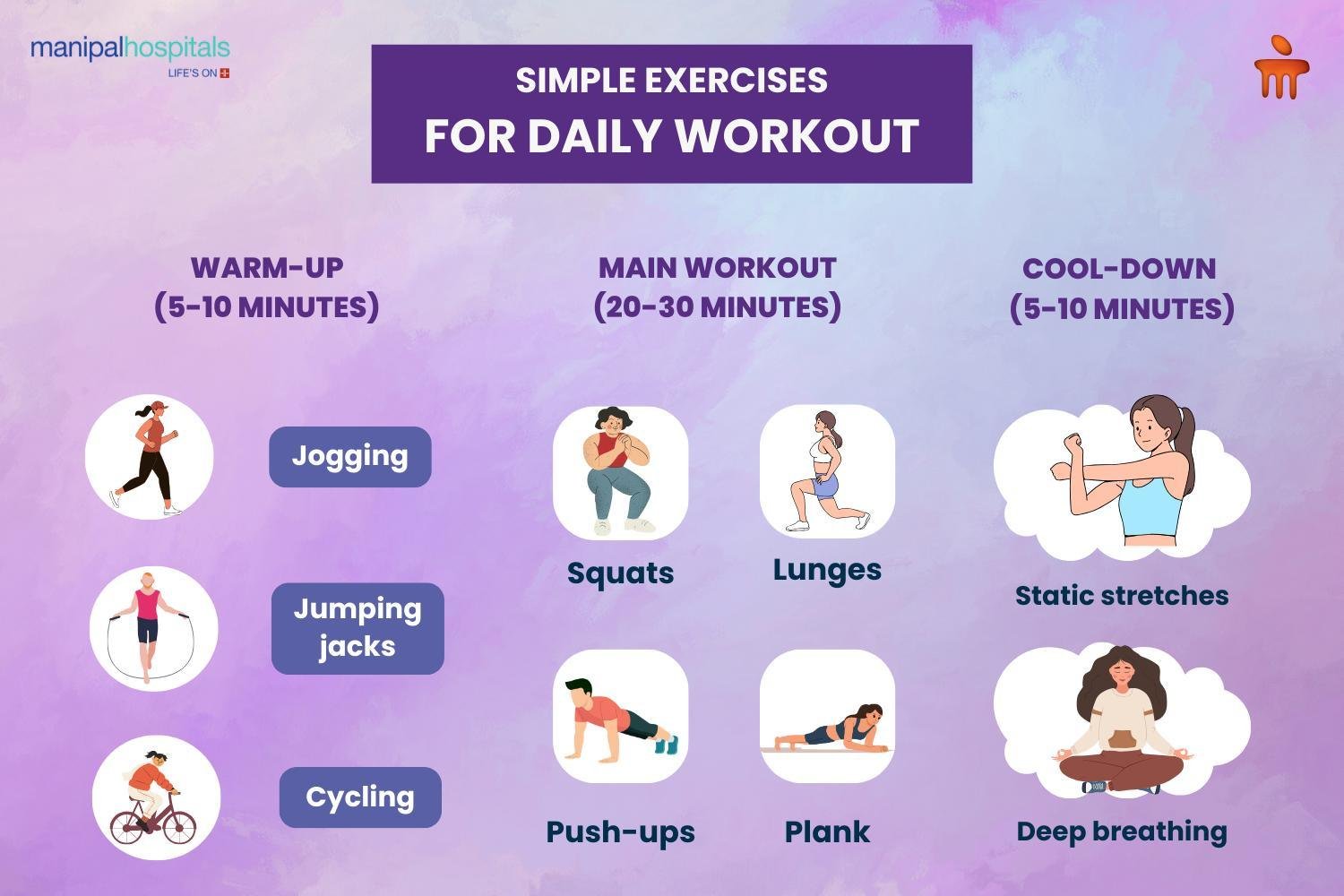
- Warm-up (5-10 minutes):
- Light cardio (jogging in place, jumping jacks) to increase blood flow.
- Dynamic stretches (arm circles, leg swings, torso twists) to prepare muscles and joints.
- Cool-down (5-10 minutes):
- Light cardio to gradually bring your heart rate down.
- Static stretches (holding stretches for 15-30 seconds) to improve flexibility and reduce muscle soreness.
Sample Daily Fitness Routine at Home Plans (2026)
Here are a few sample plans to get you started. Remember to adapt them to your fitness level and preferences.
Sample Plan 1: The Busy Bee (30 Minutes Daily)
This plan is perfect for those with limited time, focusing on efficiency and full-body engagement.
Monday: Full Body Strength & Cardio Burst
- Warm-up (5 min): Light jogging in place, arm circles, leg swings.
- Workout (20 min):
- Squats: 3 sets of 12 reps
- Push-ups (on knees or toes): 3 sets of as many reps as possible (AMRAP)
- Walking Lunges: 3 sets of 10 reps per leg
- Plank: 3 sets, hold for 30-60 seconds
- Jumping Jacks: 3 sets of 30 seconds
- Glute Bridges: 3 sets of 15 reps
- Cool-down (5 min): Static stretches (quad, hamstring, chest, triceps).
Tuesday: Yoga Flow for Flexibility & Core
- Warm-up (5 min): Gentle movements, cat-cow pose.
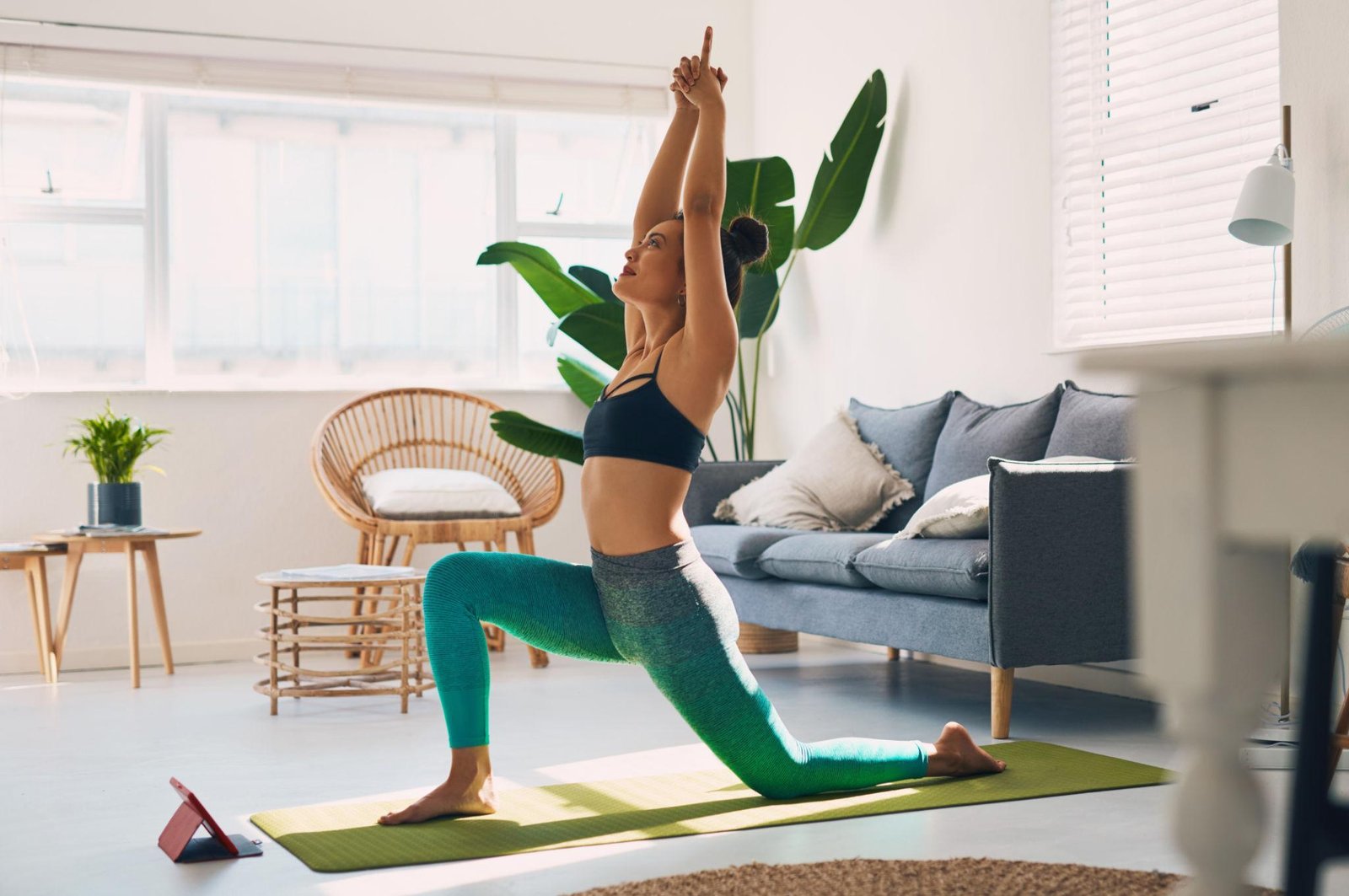
- Workout (20 min): Focus on a Vinyasa or Hatha yoga sequence incorporating poses like Downward-Facing Dog, Warrior Poses, Triangle Pose, Cobra Pose, and a gentle spinal twist. Utilize online yoga videos if needed.
- Cool-down (5 min): Savasana (Corpse Pose).
Wednesday: HIIT Cardio Blast
- Warm-up (5 min): High knees, butt kicks, dynamic stretches.
- Workout (20 min): Perform each exercise for 40 seconds, followed by 20 seconds of rest. Repeat the circuit 3-4 times.
- Burpees
- Mountain Climbers
- Jump Squats
- High Knees
- Jumping Lunges
- Cool-down (5 min): Deep breathing, light stretching.
Thursday: Upper Body & Core Focus
- Warm-up (5 min): Arm circles, shoulder rolls, torso twists.
- Workout (20 min):
- Push-ups: 3 sets AMRAP
- Dumbbell Rows (or resistance band rows): 3 sets of 12 reps per arm
- Overhead Press (with dumbbells or resistance bands): 3 sets of 12 reps
- Bicep Curls (with dumbbells or resistance bands): 3 sets of 12 reps
- Triceps Dips (using a chair): 3 sets of 10-15 reps
- Crunches: 3 sets of 20 reps
- Leg Raises: 3 sets of 15 reps
- Cool-down (5 min): Static stretches for arms, shoulders, chest, and abs.
Friday: Lower Body & Glute Focus
- Warm-up (5 min): Leg swings, dynamic hip stretches.
- Workout (20 min):
- Squats: 3 sets of 15 reps
- Walking Lunges: 3 sets of 12 reps per leg
- Glute Bridges: 3 sets of 20 reps (consider single-leg variations)
- Calf Raises: 3 sets of 20 reps
- Donkey Kicks: 3 sets of 15 reps per leg
- Fire Hydrants: 3 sets of 15 reps per leg
- Cool-down (5 min): Static stretches for legs and glutes.
Saturday: Active Recovery or Fun Cardio
- Choose an activity you enjoy: Go for a longer walk, dance to music, try a beginner Pilates video, or do some light stretching and foam rolling. Focus on movement and enjoyment.
Sunday: Rest or Gentle Mobility
- Complete rest is essential for muscle recovery. If you feel up to it, engage in very light activity like a gentle walk or some foam rolling. Listen to your body.
Sample Plan 2: The Strength Seeker (45-60 Minutes Daily)
This plan incorporates more volume and intensity for those looking to build significant strength and muscle.
Monday: Upper Body Push (Chest, Shoulders, Triceps)
- Warm-up (10 min): Dynamic stretches, light cardio.
- Workout (35-45 min):
- Incline Dumbbell Press (or push-ups with feet elevated): 4 sets of 8-12 reps
- Overhead Press (dumbbell or barbell): 4 sets of 8-12 reps
- Dumbbell Flyes (or resistance band flyes): 3 sets of 12-15 reps
- Lateral Raises (dumbbell or resistance band): 3 sets of 12-15 reps
- Triceps Pushdowns (with resistance band or cable machine if available): 3 sets of 10-15 reps
- Overhead Triceps Extensions (dumbbell): 3 sets of 10-15 reps
- Dips (assisted or bodyweight): 3 sets AMRAP
- Cool-down (5 min): Static stretching for chest, shoulders, triceps.
Tuesday: Lower Body & Core
- Warm-up (10 min): Dynamic leg stretches, glute activation exercises.
- Workout (35-45 min):
- Barbell Squats (or Goblet Squats with dumbbell/kettlebell): 4 sets of 8-12 reps
- Romanian Deadlifts (dumbbell or barbell): 4 sets of 10-12 reps
- Walking Lunges (dumbbell): 3 sets of 10-12 reps per leg
- Leg Press (if machine available) or Bulgarian Split Squats: 3 sets of 10-12 reps per leg
- Hamstring Curls (resistance band or machine): 3 sets of 12-15 reps
- Calf Raises: 4 sets of 15-20 reps
- Plank Variations (side plank, forearm plank): 3 sets, hold for 60 seconds each
- Russian Twists (with weight optional): 3 sets of 15-20 reps per side
- Cool-down (5 min): Static stretching for quads, hamstrings, glutes, calves.
Wednesday: Upper Body Pull (Back, Biceps)
- Warm-up (10 min): Dynamic stretches, focus on shoulder mobility.
- Workout (35-45 min):
- Pull-ups (assisted or bodyweight): 4 sets AMRAP
- Barbell Rows (or dumbbell rows): 4 sets of 8-12 reps
- Lat Pulldowns (resistance band or machine): 3 sets of 10-15 reps
- Face Pulls (resistance band): 3 sets of 15-20 reps
- Seated Cable Rows (or resistance band rows): 3 sets of 10-15 reps
- Barbell Curls (or dumbbell curls): 3 sets of 10-12 reps
- Hammer Curls (dumbbell): 3 sets of 10-12 reps
- Cool-down (5 min): Static stretching for back and biceps.
Thursday: Full Body Conditioning & Cardio
- Warm-up (10 min): Thorough dynamic warm-up.
- Workout (35-45 min): Circuit training style. Perform each exercise for 45 seconds, followed by 15 seconds rest. Complete 4-5 rounds.
- Kettlebell Swings
- Burpees
- Push-ups
- Jump Squats
- Mountain Climbers
- Renegade Rows (dumbbell)
- High Knees
- Cool-down (5 min): Full body static stretching.
Friday: Active Recovery & Mobility
- Engage in a longer yoga session (45-60 minutes), focus on foam rolling and deep stretching, or go for a long, leisurely walk or bike ride. The goal is to promote blood flow and aid recovery without taxing the muscles.
Saturday: Optional – Skill Work or Favorite Activity
- If you have a specific skill you want to develop (e.g., handstands, advanced yoga poses) or a cardio activity you particularly enjoy (e.g., dancing, swimming if accessible), dedicate this day to it. Keep it fun and engaging.
Sunday: Rest
- Crucial for muscle repair and growth. Allow your body to fully recover.
Essential Equipment for Your Home Fitness Journey
While bodyweight exercises are incredibly effective, a few key pieces of equipment can enhance your daily fitness routine at home and provide more variety.
- Yoga Mat: Provides cushioning and grip for floor exercises, yoga, and stretching.
- Resistance Bands: Inexpensive, versatile, and portable. Available in various resistance levels. A set of loop bands and tube bands with handles is a great starting point.
- Dumbbells: Start with a couple of pairs in different weights (e.g., 5 lbs and 10 lbs) and gradually increase as you get stronger. Adjustable dumbbells are a space-saving option.
- Kettlebell: Offers a different training stimulus, excellent for dynamic movements like swings. A 15-25 lb kettlebell is a good starting point for many.
- Jump Rope: An affordable and highly effective cardio tool.
- Pull-up Bar: A doorway pull-up bar can significantly enhance your upper body training.
- Foam Roller: Essential for self-myofascial release and muscle recovery.
Staying Motivated and Consistent with Your Daily Routine
Consistency is the cornerstone of any successful fitness program. Here are strategies to keep your motivation high:
- Find Your “Why”: Reconnect with your core reasons for wanting a daily fitness routine. Is it for health, energy, stress relief, or a specific goal? Keep this purpose at the forefront.
- Track Your Progress: Use a journal, app, or spreadsheet to log your workouts, reps, weights, and how you felt. Seeing your improvements over time is incredibly motivating. Consider using wearable fitness trackers for a comprehensive overview of your activity levels and health metrics.
- Set Realistic Goals: Avoid setting yourself up for failure. Start small and gradually increase the challenge. Celebrate small victories along the way.
- Make it Enjoyable: Choose activities you genuinely like. If you dread your workout, you won’t stick with it. Experiment with different types of exercise until you find what resonates.
- Find an Accountability Partner: Share your goals with a friend or family member. Check in regularly, or even schedule virtual workouts together.
- Create a Dedicated Space: Designate a specific area in your home for exercise. Keep it clean, organized, and free from distractions. This mental separation can signal “workout time.”
- Reward Yourself: Plan healthy rewards for reaching milestones (e.g., a new workout outfit, a massage, a relaxing bath).
- Variety is Key: Prevent boredom by changing your routine regularly. Try new exercises, follow different online classes, or explore new workout styles.
- Listen to Your Body: Don’t push through pain. Rest and recovery are just as important as the workouts themselves. Adjust your routine as needed.
- Embrace Imperfection: Some days will be harder than others. If you miss a workout, don’t beat yourself up. Just get back on track the next day. Consistency over perfection is the mantra.
- Visualize Success: Spend a few minutes each day visualizing yourself completing your workout and achieving your fitness goals. Positive visualization can be a powerful motivator.
- Invest in Quality: Having comfortable workout clothes and good quality equipment can make the experience more enjoyable and encourage you to use them.
Nutrition and Hydration: Fueling Your Daily Fitness
A consistent fitness routine is only part of the equation. Proper nutrition and hydration are vital for energy levels, muscle recovery, and overall health.
- Hydration: Drink plenty of water throughout the day, especially before, during, and after your workouts. Aim for at least 8 glasses (64 ounces) of water daily, and more if you’re exercising intensely or in a hot climate. Electrolyte drinks can be beneficial for prolonged, intense workouts.
- Balanced Diet: Focus on whole, unprocessed foods. Include lean protein sources (chicken, fish, beans, tofu), complex carbohydrates (whole grains, fruits, vegetables), and healthy fats (avocado, nuts, seeds, olive oil).
- Pre-Workout Nutrition: Consume a small, easily digestible meal or snack containing carbohydrates about 1-2 hours before your workout to provide energy. Examples include a banana, a small bowl of oatmeal, or a piece of toast with peanut butter.
- Post-Workout Nutrition: Within 30-60 minutes after your workout, consume a meal or snack containing both protein and carbohydrates to aid muscle repair and replenish glycogen stores. Examples include a protein shake with fruit, Greek yogurt with berries, or chicken breast with sweet potato.
- Listen to Your Body’s Cues: Pay attention to hunger and fullness signals. Avoid restrictive fad diets and focus on sustainable, healthy eating patterns. Consulting a registered dietitian or nutritionist can provide personalized guidance.
The Mental Health Benefits of a Daily Fitness Routine
The impact of regular exercise extends far beyond the physical. A daily fitness routine at home is a powerful tool for enhancing mental well-being.
- Stress Reduction: Exercise is a fantastic way to manage stress. Physical activity releases endorphins, which have mood-boosting and pain-relieving effects. It also provides a healthy outlet for pent-up tension.
- Improved Mood: Regular exercise can alleviate symptoms of depression and anxiety. The endorphin release, coupled with the sense of accomplishment, can significantly improve your overall outlook.
- Enhanced Cognitive Function: Studies show that exercise can improve memory, focus, and problem-solving skills. It increases blood flow to the brain and promotes the growth of new brain cells.
- Better Sleep Quality: Engaging in regular physical activity can help you fall asleep faster and enjoy deeper, more restful sleep. However, avoid intense workouts close to bedtime.
- Increased Self-Esteem and Confidence: As you get stronger, fitter, and achieve your fitness goals, your self-esteem and confidence will naturally increase. This positive self-perception can spill over into other areas of your life.
- Mindfulness and Presence: Activities like yoga and tai chi encourage mindfulness, helping you stay present and focused. Even a vigorous workout can serve as a form of moving meditation, allowing you to disconnect from daily worries.
Integrating Your Daily Fitness Routine into Your Life
Making your daily fitness routine at home a seamless part of your life requires strategic planning and integration.
- Schedule It Like an Appointment: Block out time in your calendar for your workouts. Treat these times with the same importance as a work meeting or a doctor’s appointment.
- Morning Workouts: Many find that exercising first thing in the morning sets a positive tone for the day and prevents other tasks from getting in the way.
- Lunchtime Workouts: If your schedule allows, a quick workout during your lunch break can be a great way to de-stress and re-energize.
- Evening Workouts: For some, unwinding after a long day with exercise is the perfect solution. Just be mindful of not exercising too close to bedtime if it disrupts your sleep.
- Break It Up: If a solid block of time isn’t feasible, break your workout into smaller segments throughout the day. A 10-minute walk in the morning, 10 minutes of strength training at lunch, and 10 minutes of stretching in the evening still contribute significantly.
- Involve Your Family: If you have children, incorporate them into your workouts. Many exercises can be modified for kids, turning fitness into a fun family activity.
- Utilize Technology: Fitness apps, online classes, and virtual training platforms offer structure, guidance, and motivation. Explore options like Peloton Digital, Nike Training Club, or YouTube fitness channels.
The Long-Term Benefits of a Consistent Home Fitness Routine
Committing to a daily fitness routine at home in 2026 is an investment with lifelong returns. Beyond the immediate benefits of improved mood and energy, consider the long-term advantages:
- Reduced Risk of Chronic Diseases: Regular physical activity significantly lowers your risk of developing conditions like heart disease, stroke, type 2 diabetes, certain types of cancer, and osteoporosis. The Centers for Disease Control and Prevention (CDC) highlights the crucial role of exercise in disease prevention. https://www.cdc.gov/physicalactivity/basics/adults/index.htm
- Improved Longevity: Studies consistently show that individuals who maintain a regular exercise regimen tend to live longer, healthier lives.
- Enhanced Quality of Life: As you age, maintaining strength, mobility, and cardiovascular health becomes paramount. A consistent fitness routine helps you remain independent and active for longer.
- Better Management of Existing Conditions: For individuals managing chronic conditions, exercise can play a vital role in symptom management and improving overall well-being.
- Stronger Bones and Joints: Weight-bearing exercises and resistance training are essential for maintaining bone density and joint health, reducing the risk of falls and fractures.
- Increased Energy Levels: While it might seem counterintuitive, expending energy through exercise actually leads to increased overall energy levels and reduced feelings of fatigue.
Conclusion: Your Journey to a Healthier, Happier You Starts Now
Embarking on a daily fitness routine at home is one of the most empowering decisions you can make for your health and well-being in 2026. It’s not about achieving perfection overnight, but about building sustainable habits, celebrating progress, and enjoying the journey. By understanding your goals, choosing activities you love, structuring your week wisely, and staying committed, you can transform your body and mind from the comfort of your own home. Remember that consistency trumps intensity, and every small step you take contributes to a larger, healthier future. So, lace up those shoes, put on your favorite music, and start building the vibrant, energetic life you deserve. Your ultimate guide to a powerful daily fitness routine at home is here, and the time to begin is now.
Frequently Asked Questions
What is the minimum amount of time I should dedicate to a daily fitness routine at home?
While more is often better, even 15-20 minutes of focused physical activity per day can yield significant health benefits. The key is consistency. Start with a duration that feels manageable and gradually increase it as your fitness improves and the habit solidifies. Prioritize quality movement and engagement over simply clocking time.
Do I need special equipment to start a daily fitness routine at home?
Absolutely not! While equipment like resistance bands, dumbbells, or a yoga mat can enhance your workouts, you can achieve a fantastic full-body workout using only your bodyweight. Exercises like squats, lunges, push-ups, planks, and jumping jacks require no equipment at all and are highly effective.
How can I stay motivated if I live alone and have no one to work out with?
Motivation can be a challenge, but there are many strategies. Find activities you genuinely enjoy, track your progress meticulously to see how far you’ve come, set achievable short-term and long-term goals, and create a dedicated workout space that inspires you. Utilize the vast array of online fitness classes and communities for virtual connection and guidance. Rewarding yourself for consistent effort is also a powerful motivator.
Is it okay to do the same type of workout every day?
While consistency is key, doing the exact same workout every single day can lead to boredom, plateaus in progress, and potentially overuse injuries. It’s beneficial to vary your routine. You can incorporate different types of exercises (cardio, strength, flexibility), change the intensity, or focus on different muscle groups on different days. This approach ensures a well-rounded fitness level and keeps things interesting.
What should I do if I miss a day of my daily fitness routine?
Don’t let a missed day derail your entire progress! The most important thing is to get back on track with your next scheduled workout. Acknowledge that life happens, and perfection isn’t the goal. Consistency over time is what matters. Avoid the “all-or-nothing” mindset; a single missed session doesn’t erase the benefits you’ve already gained. Just resume your routine as planned.
How important is nutrition and hydration when following a daily fitness routine at home?
Nutrition and hydration are absolutely critical components of any fitness regimen, including a daily routine at home. Your body needs proper fuel (nutritious food) to perform during workouts and adequate hydration to function optimally. Post-workout nutrition is essential for muscle recovery and growth. Think of your diet and water intake as the essential support system that allows your fitness efforts to yield the best possible results. Neglecting them can hinder progress and impact energy levels.
Read: Unveiling the Powerful 10 Natural Home Remedies for 2026